Tuesday, October 11, 2016

Duels in the Poldark Novels

Dueling seems a barbaric practice to we  modern people, but for hundreds of years it was considered THE way to settle a matter of honor. There are two duels in the Poldark novels.

 In the 18th c. the small-sword was commonly used but late in the century the pistol replaced the sword as the wearing of swords became less fashionable. By the time of the Regency, dueling was on its way out (and out-lawed) but that doesn't mean the practice died out.

There were rules,  such as a gentleman would not challenge a socially inferior such as a blacksmith. A challenge should never be given at the time of the insult, but sent by letter.  Negotiations were handled by the seconds and even if the firing would be simultaneous or take turns receiving fire, as well as the number of shots and the distance between the duelists.  The meeting would be in a remote place typically so the law would not be alerted.  The seconds would inspect the pistols and a final opportunity to issue an apology was given.  If it was to go on then the seconds determined if the duel was to first blood, until one can no longer stand, or to the death.

"The Art of the Duel," by A Traveller, 1836, the proper technique is described: "A person should stand with his right and left shoulder in a line with the object he wishes to hit...let him raise his right arm steadily into a line with the object, bring that part of the arm between the shoulder and elbow close to the side-throw out the muscle strongly, and let it cover the breast as much as possible."

Apparently it was rare, but there is one known example of women dueling! Lady Almeria Braddock and Mrs. Elphinstone, who fought with both pistols and swords in 1792.


Mrs. Elphinstone expected  a cup of tea when she paid a social call to Lady Almeria Braddock’s London home in 1792. The visit went decidedly into unladylike territory when the hostess, evidently enraged by a casual comment Mrs. Elphinstone made about her age (not very  ladylike!), challenged her guest to a duel in Hyde Park (where Ross fights a duel too). According to reports, Mrs. Elphinstone fired her pistol first, knocking Lady Braddock’s hat to the ground (oh the outrage to the hat!). The women then took up swords, and Lady Braddock got her revenge by wounding her opponent in the arm. The “Petticoat Duel,” as it came to be known, ended without further incident when Mrs. Elphinstone agreed to write a letter of apology.  Let us be good examples of tea etiquette.

Back to Ross Poldark (the book) where the first duel takes place.  Verity sees Captain Blamey at Nampara because Ross felt he could trust her and knew her better than her father and brother.  Naturally, Francis and Charles were displeased when they found out she was meeting him at Nampara.

The scene is very much like the series......Captain Blamey calls Francis an insolent puppy.  Puppy here means an inexperienced young person.  The ultimatum is issued but the standard "cooling off" cannot happen because Captain Blamey sails for Lisbon at tomorrow's tide.  Appeals were made, a request for pistols......
Duelling Pistols in box
Francis told Jud to act as referee and to count out fifteen paces for them; Jud glanced at Ross, who shrugged.  Unlike the series, Verity stayed inside..."At the word fifteen they turned. Francis fired first and hit Blamey in the hand.  Blamey dropped his pistol. He bent and picked it up with his left hand and fired back.  Francis put up a hand to his neck and fell to the ground."  We know he lived....apparently satisfaction on both sides, but of course, Blamey could not stay and woo Verity any longer.


In 1809, Ross's friend George Canning, foreign secretary,  dueled with Lord Castlereagh, war minister.  Apparently Canning was trying to get Castlereagh removed behind his back and he didn't like it one bit!  Letters were exchanged and a duel fought on September 21, 1809. The duel took place at  6 a.m. on Putney Heath. First shots missed, but Canning was shot in the thigh on the second.  He lived until 1827, but his career was damaged by the duel.  He did become Prime Minister in 1827 but died a few months later.

Killing no murder, or a new ministerial way of settling the affairs of a nation!', a satire by Isaac Cruickshank of the duel between Castlereagh (l) and Canning that took place on September 21st, 1809  In The Angry Tide (1798-1799) much happens to Ross and Demelza. They are in London and keep running into Monk Adderley, a rake if ever there was one! Until Monk comes on the scene they are having a fabulous time and their marriage is on the mend.  Unbeknownst to Demelza or  Ross, Monk has a bet with George Warleggan that he could get Demelza into his bed and sets off to pursue her.  Poor Demelza.. she tries not to be rude to anyone, but he is relentless and Ross doesn't understand.  At any rate, it all comes to a head when Monk takes Ross's seat in Parliament.  Monk is sitting on Ross's gloves, he yanks him up by his cravat, snatches his gloves and drops him back with a thump.
Ross receives a letter challenging him to a duel and asks Dwight to be his second.  "I desire that you meet me in Hyde Park on Wednesday at 6 a.m. with a brace of pistols each, to determine our differences.... I desire that this Meeting be kept a dead secret, for reasons which must be plain to you........ Monk Adderley


Hyde Park today, a corner of it. Photo taken by the author in August, 2016

Dwight Enys tries to intervene, but neither Adderley or Ross will have it.  Fourteen paces are counted according to the book. They both fired simultaneously and it seemed both missed. The light was still not too good.  Ross had heard the ball go past.  "That will do!" Dwight said, moving forward.  Adderley dropped the empty pistol and changed hands, raised the other.  As he saw this Ross did the same. Just as he fired the pistol was knocked out of his hand and he felt a searing pain in his forearm.  To his surprise the force of the ball swung him round. He half doubled, clutching his arm, and then through the smoke saw Adderley on the ground.  UPDATE JULY 2018: The duel and other scenes were filmed at Bowood (https://www.bowood.org) a beautiful property that I have been able to visit two times! Its interesting because in later novels Demelza and Clowance visited Bowood.   I am not going to give away the whole story, but needless to say, Demelza was horrified that Ross had needlessly risked his life.  And why? Read The Angry Tide and see what Caroline thought! 

As you might have noticed, I'm crazy for historic fashions.  In The Angry Tide, Caroline takes Demelza shopping as her clothes were not fashionable enough for London.  The style had changed: waists were high, almost under the armpit, both for day and for evening. Neck and bust were much exposed... Ostrich feathers in the hair, or a few pearls.  This illustration could be what Demelza wore, found on Pinterest.

  Ross said: "That is very pretty. But where is the gown?  "This is it! This is what I bought!"  "That's a petticoat."  "Oh, Ross, you are provoking! You know well it is nothing of the sort." (LOL)  and then: "The vexing thing is, good-looking women look good in anything. Or should I say almost anything?  Well..... He stared at her. On longer inspection I like the frock. I think it has a touch of elegance. I am only a little reluctant that so many men should see so much of you."


Author in her Inspired by Poldark ensemble. Would Ross and Demelza approve? I think Caroline would!

Thanks for reading my blog. By the way, I Tweeted after a recent episode of Poldark and it was picked up and appeared in an article in The Daily Mail in London!
Bonny Wise, I amInspired by Poldark


Tuesday, September 27, 2016

Inns of Cornwall and Poldark Novels

One reason I love the Poldark novels is that Winston Graham seems to take you there... back to the 18th century and to their way of life. To me this is the most fascinating part of history - how did people live?

Life back then meant traveling on horse or by coach and stopping at an inn or having a meeting at The Red Lion in Truro or going to The Fighting Cocks Inn (both of which were real places).  In the novels, Ross spends a lot of time at The Red Lion Inn.
The Red Lion Inn, Truro, circa 1920.  Unfortunately it is no longer standing

Since Winston Graham grew up in Cornwall, he was able to research and discover authentic inns, so it does not surprise me he knew about The Red Lion or the Fighting Cocks and use them in the novels. One place I am sure Ross never went was The Soldier's Arms in Warleggan!

I was able to find a lot of research materials on this topic (Abebooks, a dangerous site for book lovers!)

 OLD CORNISH INNS, and their Place in the Social History of Cornwall, H.L. Douch, 1966

THE TORRINGTON DIARIES,  A selection from the tours of the Hon. John Byng between the years 1781 and 1794, 1954

 EARLY TOURS IN DEVON AND CORNWALL, R Pearse Chope, 1918 with a new introduction by Alan Gibson, 1967

 A COUNTRY PARSON, James Woodforde's Diary, 1758-1802, 1985

The arrival of the stage-coach at The Sun Inn, Bodmin - a water colour by Thomas Rowlandson, ca 1810

Here is what Old Cornish Inns said of The Red Lion- "In Truro the 'top' houses of the eighteenth century were The Red Lion, The Ship, The King's Head and The Queen's Head.  The original Red Lion was an old house which backed on to St. Mary's church in the same was as does it successor; it was kept for many years.... In  August 1769 it was announced that Mr. Foote's great house(which had been built in 1671) would be opened as The Red Lion Inn and Tavern, with a dining-room 73 feet long, panelled in cedar and with a room at the end of it partitioned off by folding doors  There was to be a vast number of lodging rooms with "chambers backwards for servants."  It was said with some justification that this house would be "by far the compleatest in Cornwall for an Inn and Tavern; and there is the most promising opening for an expert landlord to make a fortune."

The other inn in Truro that Ross went sometimes, The Fighting Cocks... this is what the same book says of it: "Not far away from The Bear in Truro was the sign of The Fighting Cocks.  This was near the cock-pit built behind his town house by Samuel Enys; the inn too belonged to the family (Enys!)  The brothers Lander, explorers of the Niger, were born here.  The name of this house was changed ca. 1815 to The Dolphin, the old name with its under-tones no doubt appearing disreputable.  This was always a difficult house to administer for it was near the water-front and the town green".....goes on to mention there was also a Fighting Cocks at Botus Fleming and Mevagissey.

Interesting tidbits from Parson Woodforde's Diary: Feb 3 (1767)  I spent the evening and supped at Ansford Inn, there being a Masquerade Ball there this evening, and very elegant it was, much beyond my expectation in all respects. (doesn't that sound fun?!)

Masquerade balls were very popular in the Georgian era.   It appealed to all social classes, and people.  They dressed up as clowns, shepherdesses, allegorical figures vegetables – whatever took their fancy. They cross-dressed, and, liberated by their apparent anonymity, abandoned all propriety and sense of inhibition.

Another Rowlandson, 1756-1827, was a brilliant caricaturist.

This reminds me of a passage from Demelza:


They sat down on the settle and giggled together. "I shall wear my apple green and mauve," she said presently, "the one I wore at Trenwith the Christmas before last. I don't think I am any fatter now." Ross said, "I shall wear a secondhand wig with curls on the forehead, and scarlet stockings and a coat of green silk embroidered with field mice." She giggled again, "Do you think we should be allowed in as Mrs. and Miss Poldark?" "Or two ends of a donkey, "he suggested. "We could throw lots who was to be the tail." (Demelza Poldark)

What kind of foods were served at an Inn?  Apparently it varied quite a bit in quality and quantity.  Here are the foods mentioned in my research:

tea, bread & cheese
salmon
trout
eggs
bacon
veal
cold meats
beef steak
pig
partridge
scotched collops
Cheshire cheese
West Country tarts
cucumbers
salad
gooseberry pie
rice pudding

Tea, Bread & Cheese
In Warleggan, Ross brings home a pound of Soachong tea, saying "its better than the stuff we get from Trencrom. I thought you would like to try it." Trencom was the "runner" of illicit cargo.  Soachong is Lapsang Souchong I believe, and is a deliciously smoky black tea... so appropriate for Nampara.

Cheese? Winston Graham said Demelza made cheese (as any farmhouse would have) but not what kind.  He also said she didn't like goats milk, so I think she was making a farmhouse cheddar cheese with cows milk.

Bread? I believe once a week yeast breads were made and also quick breads similar to Irish Soda Bread which can be made on the hearth on a daily basis as they go stale more quickly. One thing for sure we know barley was grown and not for beer at this time! Barley bread is mentioned throughout the series.

For tea time, this bread is delicious slathered with butter and easy to make:

ORANGE CARRAWAY BREAD

2 c. white flour
2 c. wheat flour
1 tsp. salt
1 tsp. soda
1 tsp. baking powder
Cut in 1/3 c. lard (butter should work fine too)
Add 2 tsp. carraway seeds
1 c. chopped candied orange peel
1 1/2 c. buttermilk with one egg beaten in

Make a well in the flour mixture, add the buttermilk with egg and knead a few times until all comes together, gather into a ball.  Flatten the ball to about 2" and take a sharp serrated knife and cut across the middle and then the other direction.  Bake in oven at 450 for 15 minutes and reduce to 400 and bake 20 minutes more.  This can be made ahead, cover in clear wrap and freeze for up to one month.

Salad or Salmagundi (18th c. Salad)
In English culture the term does not refer to a single recipe, but describes the grand presentation of a large plated salad comprising many disparate ingredients. These can be arranged in layers or geometrical designs on a plate or mixed. The ingredients are then drizzled with a dressing. The dish aims to produce wide range of flavors and colors and textures on a single plate. Often recipes allow the cook to add various ingredients which may be available at hand, producing many variations of the dish.

My Salmagundi-spring salad mix, tiny gerkins, radish & hardboiled egg with a whole grain mustard vinaigrette.


 SCOTCHED COLLOPS
A very old dish popular in the 17th and 18th century. Name is obscure... has nothing to do with Scotland or Scottish food! Recipe from Egg Pies, Moss Cakes, and Pigeons like Puffins, 18th Century British Cookery from Manuscript  Sources

 1 1/2 - 2 lbs veal or thin sliced beef (I used beef)
6 T. salted butter
1 c. beef stock
8 anchovy fillets, patted dry, and chopped
1 large shallot, minced
3 T. white wine
2 T. chopped fresh parsley
Salt & Pepper to taste
lemon wedges

For the forcemeat balls (meat balls)
1/2 lb ground beef
1/2 c. bread crumbs (I used store bought)
2 eggs, beaten
1/4 tsp ground mace
1/2 tsp. ground nutmeg
Salt & Pepper to taste


If meat needs to be pounded, pound until it is very thin, then dredge in flour and shake off excess.  Saute until just browned (do not over cook) in 3 T of butter, at moderate highly heat.  Remove and put in warm oven to keep the meat warm.

Combine the forcemeat mixture, roll into meatballs (about 1 1/2") and fry them until they are done (they will look better if baked in the oven, but this isn't authentic).  Remove meat balls, add to the skillet stock, 3 T butter, anchovies, mushrooms and shallots and saute until the mushrooms are cooked. Add the meatballs back into the skillet and the collops briefly, add wine and serve it up quickly by placing on a platter, sprinkle parsley on top and squeeze lemon juice over top (about 1 T).

So there's the meal... I can see why men would like this ( my men did!) ..meaty, bread, a little salad.......

And for dessert - RICE PUDDING
a 1791 recipe from Mrs. Frazer..The Practice of cookery, pastry, pickling, preserving, etc. by Mrs. Frazer.. slightly modified

1 c. long grained rice
2 c. milk
spoonful of butter

Simmer while stirring constantly to keep from sticking, about 15 minutes.. Add more milk if needed.
When rice is cooked, set aside. Add 1/2 c. raisins or currants, 1 tsp. cinnamon and 1 tsp. vanilla and about 1 T. grated lemon zest.

In a separate sauce pan, put three eggs, 1/2 c. sugar, 1 c. milk, and using a whisk, mix together while cooking on medium heat until the ingredients come together and nearly make a custard.  Whisk into the rice mixture.

Pour into an ovenproof bowl and then place is a baking dish with high sides and put 1 1/2" of boiling water in the pan and bake for about 20 minutes or until the pudding doesn't "jiggle".  Recipe said to cover the bowl, all I had was parchment paper and it worked well (not sure it is really needed).

To serve I used a scoop... I didn't have time to make a sauce, so I just poured a little whole cream around the base of the scoop.  You can also use orange zest in this recipe.


Rice pudding, lightly sweet and very satisfying


 That is it for this time.  I do hope you enjoy reading my blogs!  Feel free to leave comments, I appreciate them.

Bonny Wise, I am
Inspired by Poldark


Monday, August 29, 2016

Poldark Trail in London

I recently visited London and went on a Poldark Trail while there.  Didn't know there was a Poldark Trail?  My friend Gill Roffey has been researching the places mentioned in the books and found them!  Many are still there.  Quite amazing actually!

So instead of the promised blog about Inns and the food and drinks that were served (I will do that one later), this blog will be about the Poldark Trail in London which I think you will find just as diverting.

Although the Poldarks are a fictional family of Cornwall, Winston Graham places Ross and friends in real life locations.

The following may contain SPOILER information as some of this will go through books not adapted yet for the show.

Toward the end of The Four Swans, Ross will be elected as a Member of Parliament by beating George Warleggan by one vote!  George is not happy about this, "George was standing with his hands behind his back, the icy sweat of anger and frustration soaking through his shirt, so upset that he could hardly memorize the way the voting had gone or which of his expected supporters had let him down."

If you have read The Four Swans and the next book, The Angry Tide, you will know that there is a traumatic event at the end of The Four Swans so Ross goes to London to begin serving as MP and does not come back to Cornwall for eight months!  I love this quote from Demelza when Ross asks what has she been doing while he was away: "What have I been doing? Demelza stared at him in indignation at the change of subject.  "Seeing to your mine and your affairs of course; trying to bring up your children in the way they should go! Doing all the ordinary things of living and breathing and - and looking to the farm and the rest! And - and waiting for your letters and answering 'em! Living just as I have always lived - but without you! That's all I've been doing." (The Angry Tide)

When Ross finally returns, Demelza asks about his lodging.. "No, they were good rooms. Mrs. Parkins is a tailor's widow. George Street is off the Strand, near the Adelphi Buildings, and quiet after the noise of the main streets.  Eighteen shillings a week I paid - did I tell you? - carpeted and furnished.  Mainly I ate at the coffee houses and such.  But Mrs. Parkins made me a meal when I asked.  It's a way from Westminster, but there were always ferries at the foot of the steps to take me there." (In actuality, it is not that far...)

#6 George Street

This is the Georgian townhouse, #6 George Street (now called York Buildings ) where Winston Graham said Ross lived while an MP.
.
Two streets over on Craven Street is where American diplomat and founding father, Benjamin Franklin lodged.  We toured the house as it is very original to the time period and was probably similar to the house where Ross stayed.

Side long view of George street. Down where the trees are is the Thames and around the corner the Adelphi building(s).

Demelza asks "And where you meet - in Parliament?"  "A hybrid, born of a chapel for a father and a bear-pit for a mother.  You go to the chamber, you approach it, through Westminster Hall, which is a fine lofty building, but the chamber itself is much like Sawle Church, except that the benches face each other instead of the pulpit and are banked so that each may see over the one below.  At times it is insufferably crowded, at others nearly empty.  The business usually starts at three and can go on till midnight.  But the business itself is most of the time so parochial that one wonders it could not have been settled locally............"(The Angry Tide)

First Day of Term, Westminster Hall, 1738


Roof of Westminster Hall taken August, 2016
George Canning
William Pitt


St Stephen's Chapel, sometimes called the Royal Chapel of St Stephen, was a chapel in the old Palace of Westminster which served as the chamber of the House of Commons of England and that of Great Britain from 1547 to 1834. It was largely destroyed in the fire of 1834.  This is where Ross would have sat, listened and sometimes even spoke.


Demelza asks Ross about the slave debate..."And you spoke in it?"  Ross turned and stared.  "Who told you that?"  "I met Wilberforce twice in February," Ross said. "He is a likeable, warm, religious man, strangely blinkered.  You know the saying charity begins at home.  Well, not with him.  Quite the reverse. Charity begins overseas. He will work up in a fine rage about the condition of the slaves and the slave ships - as who would not? - but can see little in the condition of his own countrymen to take exception to. (more at the end of Book One, Chapter Three of The Four Swans)

In Warleggan, Ross goes to London to see Caroline who is staying at her aunt Sarah's home.  Warleggan is one of those books, you must read multiple times and I have!

"It was snowing the following day when Ross set out to find Caroline.  Her address was No. 5 Hatton Garden, which he knew to be a superior residential district; but he had to ask many times on the way."
No. 5 Hatton Garden today. Was once a residential district, now commercial.  In later books, Ross and Demelza's daughter Bella (Isabella-Rose) also stays here.

While in London Ross was staying at the Mitre in Hedge Lane.

We found the Mitre just a couple streets over, down a "close" from Hatton Garden! Not open on a weekend, so could not go inside.

Ross is successful in his mission to bring Caroline back to Cornwall with Dwight (yea!) and then the epic part of the story when Ross tells Demelza it is her he truly loves (duh Ross!) and then Demelza makes a confession about McNeil at Sir Hugh's party and all hell breaks loose as Demelza packs her bag and is saddling Darkie to ride out of his life.........Did you realize during all this Caroline is sleeping in their house and Dwight is in the barn? How could they not have heard all this going on?

So Ross convinces Demelza to come back inside the house and if not for a fomenting cask of beer, well she might have been gone. ... "And there's one other thing I want you to know," he added.  "That is how deeply sorry I am that I ever hurt you in the first place - in May, I mean.  You were so undeserving of any harm.  All these months.... I know how you will have felt.  I want you to know that.  If you had gone off with McNeil, I should have had only myself to blame."  She dropped the reins and put up her hands and covered her face with them in a sudden gesture of distress.  She wanted to say something but could think of nothing at all.  After a minute or two he said, "Does it upset you now to be told that I love you?"

Oh Ross! So what does he do? Gives her two pieces of jewelry purchased in Chick Lane... unfortunately that part of the city was probably destroyed in WW2.  Its rather far away from Hatton Garden as well.

This is the Georgian part of Grosvenor Square where George Warleggan stayed while in "town" ie London. The American Embassy is at the end of the street. It was called King Street then, now Culcross.  This is an educated guess.
This is Hyde Park (a small portion actually) where Ross fought a duel with that rake Monk Adderley.  Oh what a twisted web is that story! Ross and Demelza are in London (Demelza's first time) and this Monk Adderley takes a liking to her and makes a bet with George Warleggan he had get her into his bed.  Demelza being Demelza, she didn't want to be totally rude to this man, but kept trying to put him off, but not sufficiently enough for Ross....   Adderley invites Ross to a duel in Hyde Park  and Ross takes a hit to the arm and Adderley later dies of his wounds.  This is from towards the end of The Angry Tide.

The Angry Tide ranks up there as one of the best books of the series, I love this as it shows the depth of the connection and love for each other:


 “What I have seen last night – makes me sick at heart – sick for all the charm and beauty that is lost – in Elizabeth. But most of all it makes me afraid.”  “Afraid, Ross?  What of.”  “Of losing you, I suppose.”  “There’s little chance.”  “I don’t mean to another man – though that was bad enough.  I mean of losing you physically, as a person, as a companion, as a human presence being beside me and with me all my life.”  Her heart opened to him.  “Ross,” she said, “there’s no chance. Unless you throw me out”  “It’s not a chance, it’s a certainty,” he said.  “Seeing Elizabeth like that….We are at the end of a century, at the end of an era…”  “its just a date.”  “no, it isn’t. Not for us.  Not for anybody; but especially not for us.  It’s – it’s a watershed. We have come up so far; now we look down.”  “We look onwards, surely.”  “Onwards and down. D’you realize there will come a time, there will have to come a time, when I shall never hear your voice again, or you mine?  It may be sentimental to say so but this – fact is something I find intolerable, unthinkable, beyond bearing….”  Demelza moved from her chair suddenly, knelt to the fire and picked up the bellows and began to work them.  It was to disguise the tears that had lurched to the edge of her lashes.  She realized that he had reached some ultimate darkness of the soul, that he struggled in deep waters, and that perhaps only she could stretch out a hand.” (The Angry Tide)
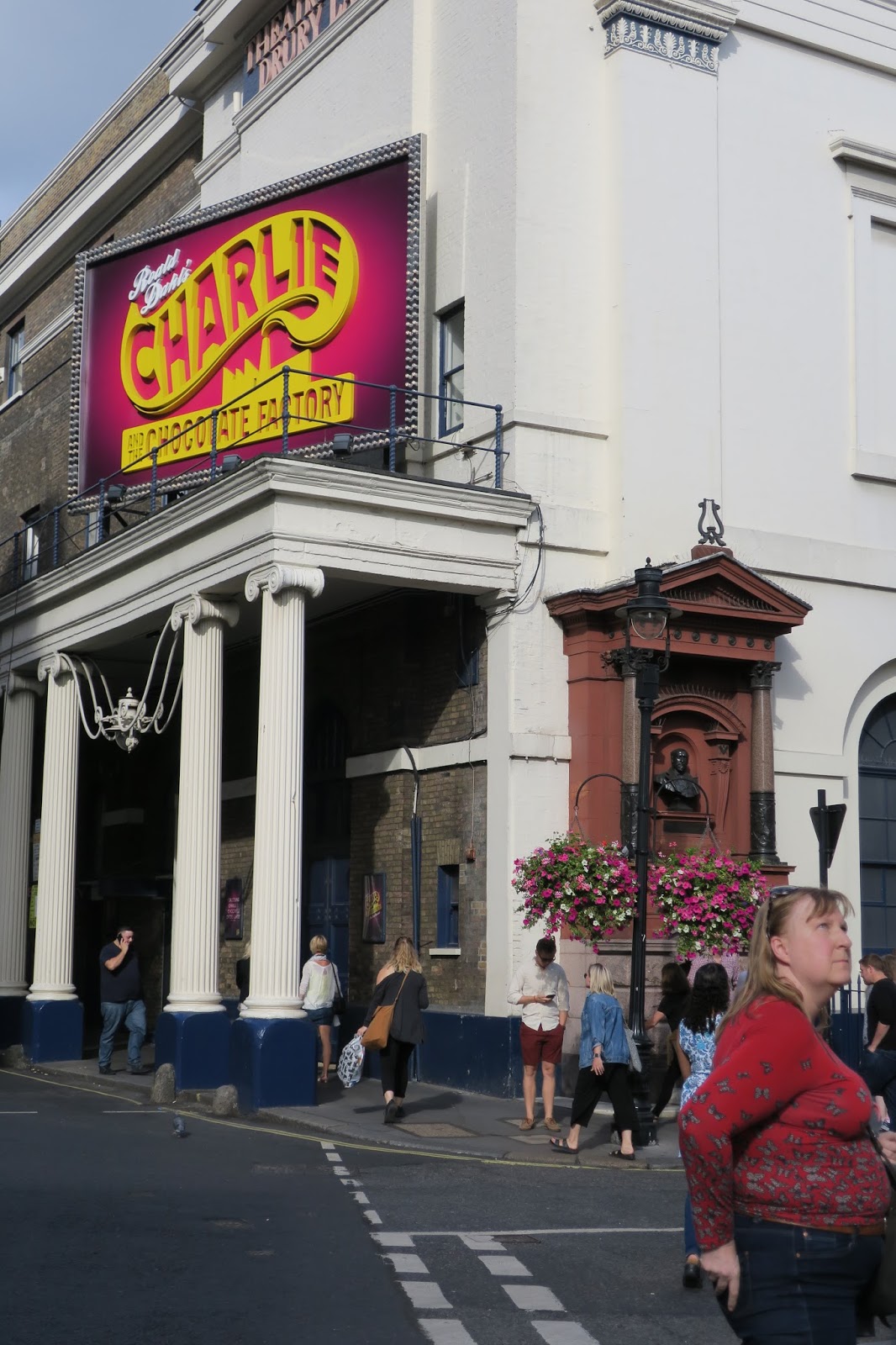
Drury Lane Royal Theatre

historic illustration of interior of Drury Lane Theatre


 This is Drury Lane Royal Theatre. Ross and Demelza go there in The Angry Tide. "They took a box at Drury Lane, which cost Ross twenty shillings and held four seats, there saw Mr John Kemble, Mr William Barrymore and Mrs Powell in The Revenge, a tragedy in five acts by Edward Young.  Demelza had not seen a play since the one performed in their library  more than ten years ago, and that was a mere charade compared to this."


Ross and Demelza's son Jeremy finally convinces Cuby Trevanion, the love of his life, to run away with him and get married.  By this time Jeremy has joined the military and is on leave.  The whole story is too convoluted to relay here, but needless to say, Jeremy has shades of his father in this near fatal romance!  While only taking part of his father's antiquated advice, he climbs in the window of Caerhays (her family home) to convince Cuby to run away with him.   Jeremy and Cuby are married in January, 1815 at St.  Clement in The Strand.  The church was heavily damaged in WW2, but is still there and is lovely.


St. Clement in The Strand

The Twisted Sword, which originally I am sure was to be the last Poldark novel was published in 1990. I consider The Twisted Sword another seminal book in the series and have read it several times.  Again Ross is asked to serve his country and go to France as an "observer," but instead of leaving Demelza and the children at home (Isabella-Rose and Henry by this time), they go with him and then Dwight and Caroline and their two girls are to follow in a few weeks. Of course it ends up not as easy as that! But you will have to read the book to learn the whole story. It's quite good and I do hope the books will continue to be adapted.

Part of the story is that Ross finally is made to accept a baronetcy for his mission which makes Demelza, Lady Poldark (much deserved too!).  All is going well at first. She is enjoying herself, this strange society and goes on a shopping trip.  Although at first I was confused about this quote, I understand it now:

Demelza died at the thought of the expense but died with pleasure at the thought of wearing them.  And like many of the men, Ross approved of the result; and unlike the other men, he was able to prove his approval when he got home at night or most often early in the morning.  It was many years since he had been out of love with his wife, but now he fell in love with her over again.” (The Twisted Sword)

Bonaparte gets free from Elba and sets off to reconquer Europe and all hell breaks lose.  Ross is taken prisoner but Demelza and the children escape with a friend just in the nick of time before Bonaparte arrives back in Paris!  Exciting stuff!

Eventually Demelza heads back to London after a trip to Brussels to visit with Jeremy and his wife Cuby.  In London she was invited to stay at Lansdowne House by an old suitor of her daughter, Clowance.  Although altered somewhat, Lansdowne House is still there and a private club so we could not see the inside.

Lansdowne House where Demelza stayed on Berkeley Square. From 1763 to 1929 it belonged to the Petty-FitzMaurice family.

 
 Around the corner is the home belonging to George Canning, statesman and friend to Ross.  They corresponded much and he sent Ross on many "missions" for the government.  Demelza knew Ross needed the adventure and didn't complain....much!


George  Canning's home in Berkeley Square
There are approximately 900 of these blue signs throughout London


So that is it for this blog. I hope you have enjoyed reading this and learning about the real places that are in the books.  I had a wonderful time in London with my friend Gill and then we attended the British Film Institute preview of Season Two!  Even saw Aidan and Eleanor upclose although I was too shy to say anything to them!

Until next time!

Bonny Wise, I am
Inspired by Poldark